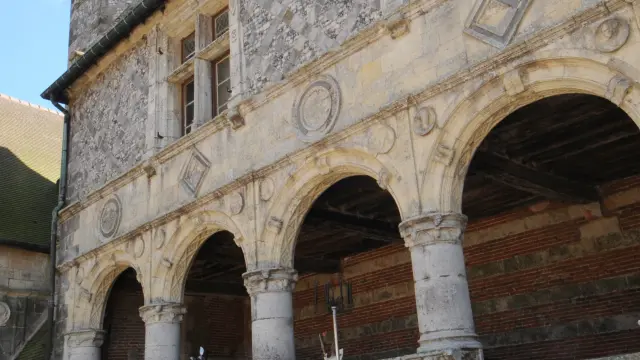
Loggia du Manoir d'Ango
|
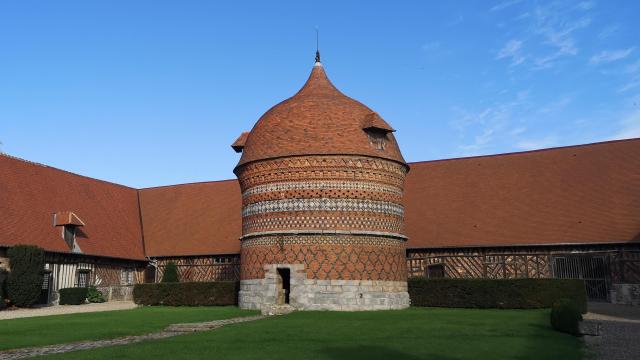
Le colombier du Manoir d'Ango à Varengeville-sur-Mer
|
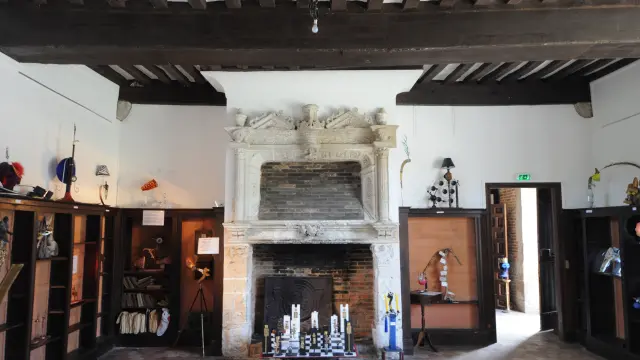
Manoir d'Ango
|
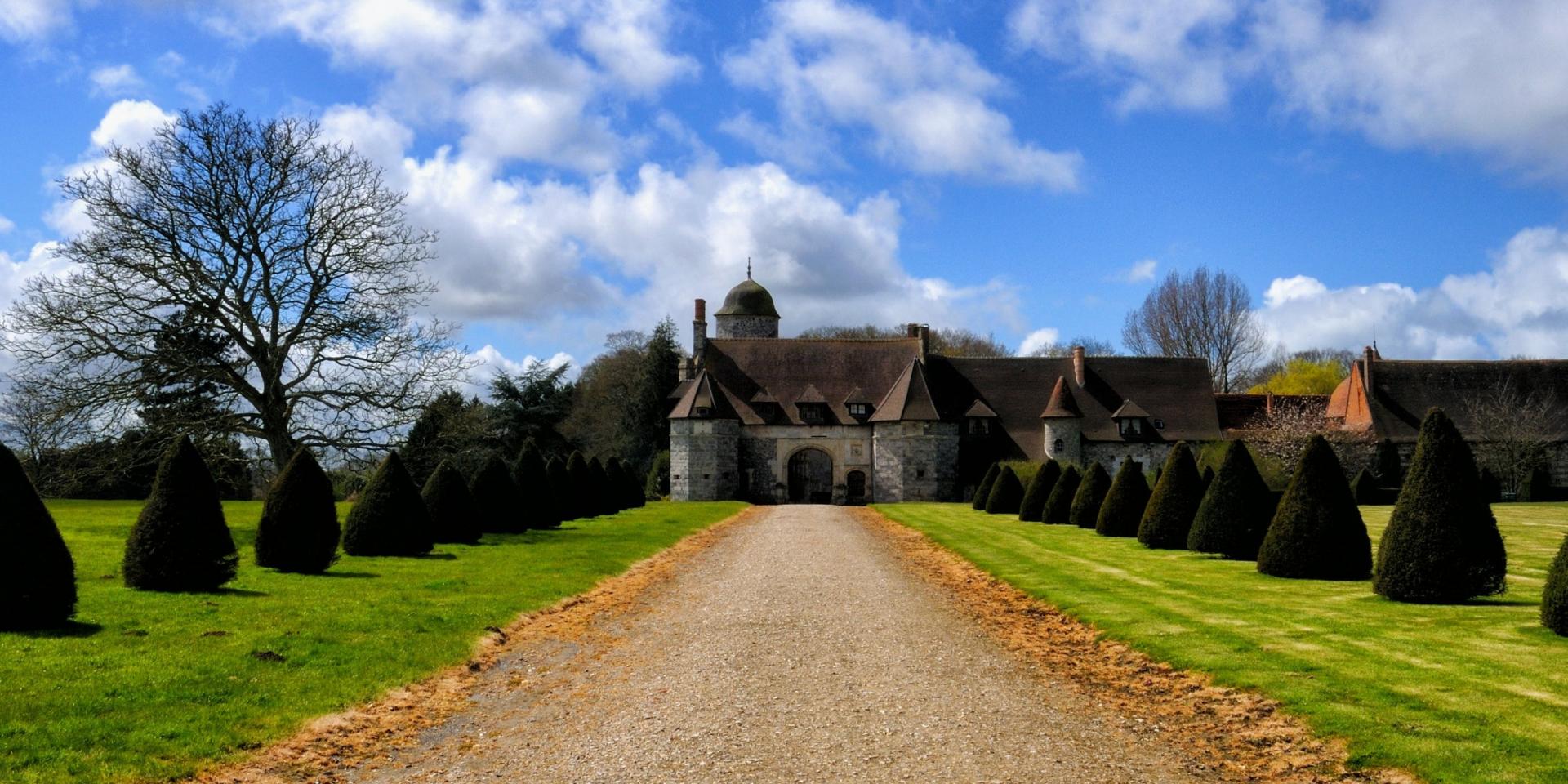
From the very start of the avenue, the magic of the place takes hold. The Italian Renaissance has found its way into the heart of Normandy. The two architectural styles blend harmoniously to tell a unique story: that of Jehan Ango.
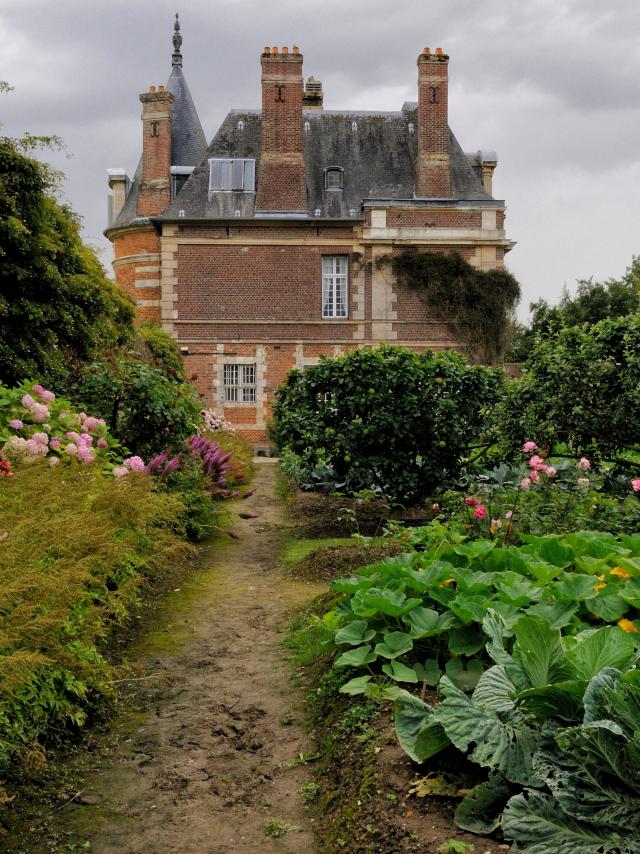
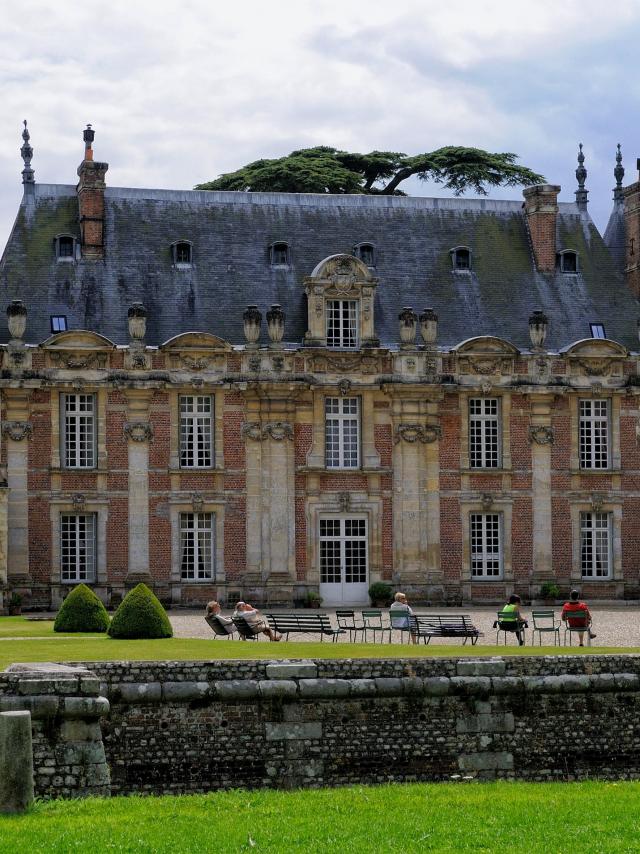
Around 1530, Jehan Ango, a famous shipowner from Dieppe, envisaged building a manor house in the Dieppe hinterland, on his lands in Varengeville. The manor features a harmonious blend of local materials: pink brick, known as ‘Varengeville brick’, flint and sandstone gathered at the foot of the nearby cliffs, whilst the decorative elements around the windows and doors are carved from stone sourced from the banks of the Seine.
It is a fine example of Renaissance architecture blended with the Norman style: the brick and flint are worked into polychrome patterns, and the main house and outbuildings are grouped around the courtyard, which was once surrounded by moats. This is reminiscent of the layout of the ‘clos-masure’ farmstead typical of the Cauchois region.
Loggia du Manoir d'Ango
|
Le colombier du Manoir d'Ango à Varengeville-sur-Mer
|
Manoir d'Ango
|
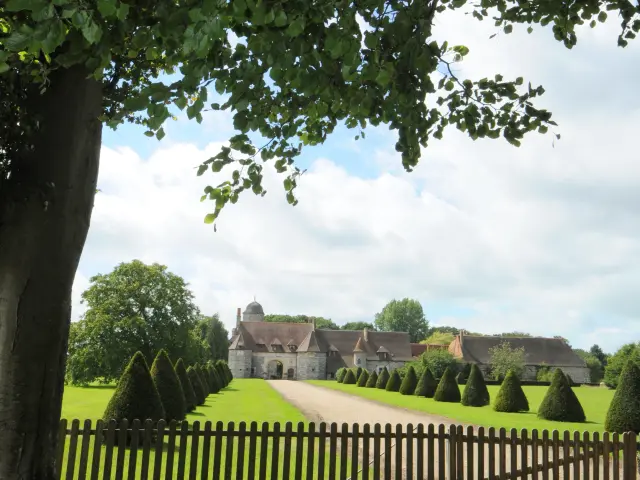
Manoir d'Ango
|
Nestled between land and sea, the architectural complex overlooks the sea. Is it not said that, from the top of one of its towers, the shipowner could watch for the arrival of his ships off the coast of Dieppe? The entire building exudes a sense of harmony, but what strikes one above all is the imposing beauty of the dovecote: its bulbous roof reflects Jehan Ango’s interest in Ottoman civilisations.
Located in the south wing, theloggia draws on the style of the Italian Renaissance, and this large balcony opening onto the courtyard served a ceremonial purpose and was used to welcome guests, as was the case during King FrançoisI’s visit. The other parts of the manor house – the kitchens, living quarters, drying room, not to mention the ornamental garden – all give an insight into the tastes of Jehan Ango and his entourage in this luxurious residence.
Upon the shipowner’s death, his heirs occupied the manor house until the French Revolution. It was then burnt down, sold as national property and converted into a farm. The stones were reused in the construction of several houses in the village. Many decorative features were subsequently stripped away.
In 1862, the manor house was selected by Mérimée to be one of the first buildings in France to be designated a ‘Monument Historique’, after which it passed through the hands of several successive families. In the early20th century, it attracted artists associated with the Surrealist movement: André Breton and Louis Aragon wrote books there, whilst Jacques Prévert, Robert Desnos and Yves Tanguy joined them. A little later, Georges Braque was also seen parking his Bentley there.
In 1928, it became the property of Mr and Mrs Hugot-Gratry. It is currently maintained by their descendants, who have been carrying out extensive restoration work since 2007.